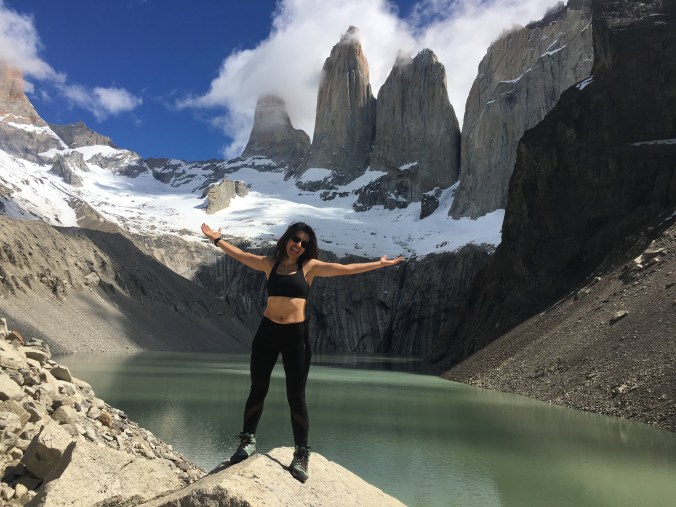
Bingol in Eastern Turkey, Istanbul then London where I currently live and enjoy an active life. Running and travelling are two big passions.
Joy of running, I discovered in summer 2013, in New York. What started as a way of meeting new people quickly become a passion. March 2014, I ran my first marathon in London and realised that I loved long distance running. Since then, I ran 8 more marathons.
Running not only made me a fitter, healthier person but gave me the physical confidence I needed to pick up other sports.
Passion for travelling started a decade earlier (2003) when I left my home in Istanbul with a suitcase, very little money and an even less English language skills. Packed lots of excitement and curiosity about what was beyond Turkey.
15th of September 2017, having stored all my belongings in a 35sq foot storage and taken a 6 months’ leave from work, I started my South America and Antarctica journey.
The centre piece of my trip was the preparation for the Antarctic Ice Marathon. I have now successfully completed and feel, again, that I am one blessed person for wanting something and seeing it come through at some point. My hope is to share my experiences and write about the places and souls I encounter.
My one other passion is to help people live healthier and more fulfilled lives but I’m still discovering what I could do to realise this passion. One thing I know is that I’d like to share my story with young girls (and boys) from underprivileged background encourage them to pick up sports, discover their hobbies, live/study/travel abroad and believe that these are within their reach.
After Steve left Quito, I spent another couple of days to find the best way of travelling to the Galapagos Islands. Being among few well protected magical places on the earth, I definitely wanted to make these islands part of my big trip. The question was “how?”.
A visit to Galapagos comes with a very high price tag. Everyone says that the best way to enjoy the Islands is to take boat trip for at least 7 days but this was way out of my budget. In any case, I don’t think that my free sprit would enjoy being stuck on a boat for that long with an inflexible itinerary.
So, I decided to fly there with no plans and to figure things out. This type of travelling, I’m now well accustomed to. In the end, I would spend unforgettable 10 days in this magical place by doing a 3 days long boat trip, then visiting 3 different islands to stay for couple of days at each.
BOAT TRIP:
My first perfect stranger was Stefané from Luxembourg. We were on the same plane and he offered me a ride to the town centre in the cab that his friends had arranged for him. Although I could not find an empty room in their hotel, I found something nearby. He was super nice and immediately introduced me to the entire gang: Pablo, Suzie and Benedict. I met them for dinner later that night and Pablo (who is German/Ecuadorian and was in charge of all organisation) mentioned that they might have an extra spot in their boat. When the agent confirmed the spot, I had to decide quickly as the boat was leaving early morning the next day. So, I reviewed their itinerary and just said ‘yes’!
During these three days we visited many Islands. Our list included Santa Fe, North Seymour, South Plaza, Sea Lion and Kicker Rock islands. Within hours of starting our trip, I had my first encounter with iguanas and sea lions.
Sea lions, I had seen from distance whilst visiting the Isla Magdalena in south of Chile but this was very different. In Chile they live in freezing conditions and do not share their living space with humans. In Galapagos they are everywhere and often very curios and not afraid to come close by.
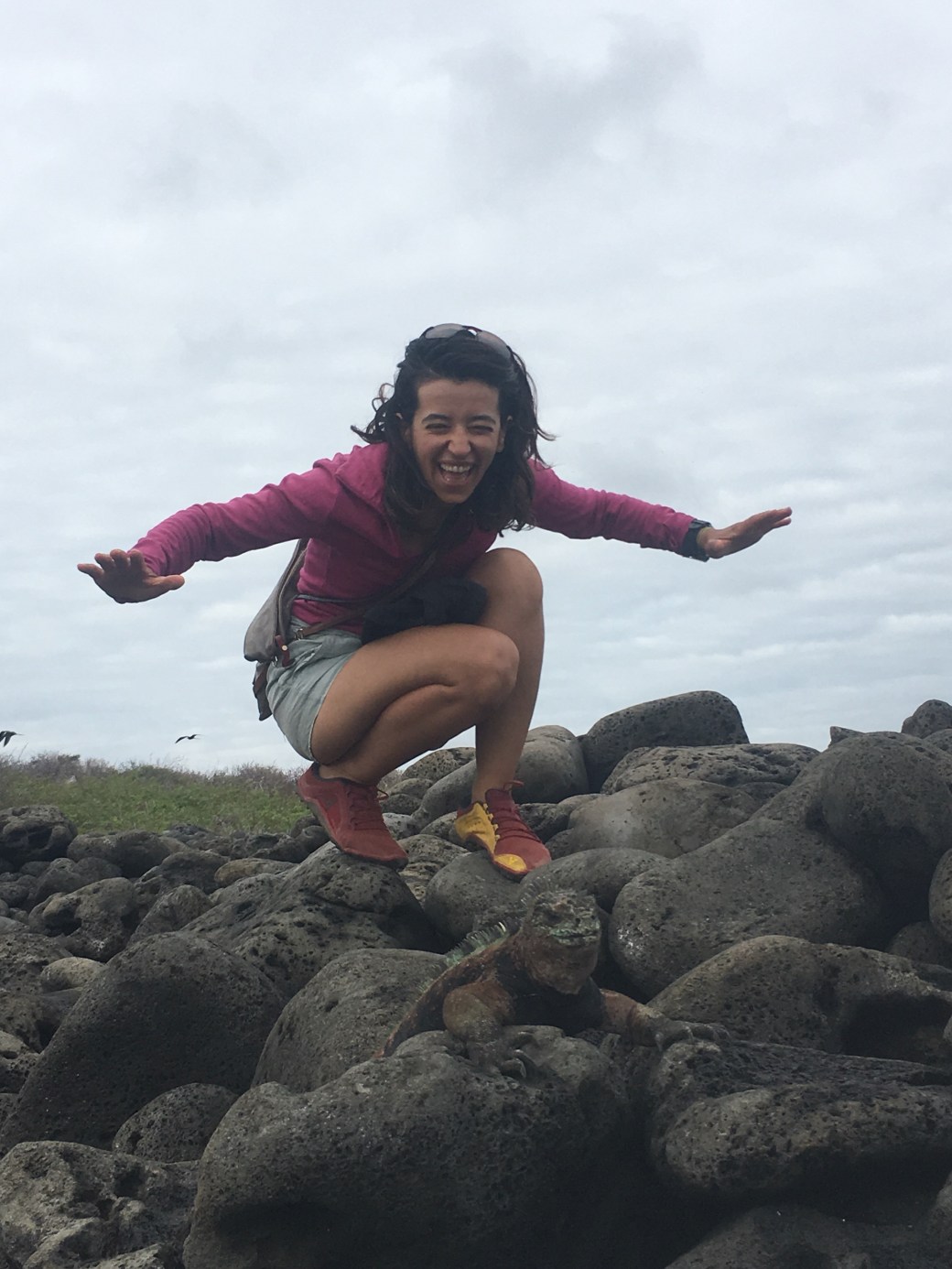
Unfazed by the people around them, iguanas become a common sight but still, I would spend minutes staring each of them at every encounter! They also have a habit of sleeping where they see convenient which could easily be in the middle of the road or a busy path. The first time I saw an Iguana asleep, I was sure that it was dead, they look hilarious!
Error
This video doesn’t exist
Other animals I saw were giant tortoises, green turtles, blue and red footed boobies, frigatebirds, albatross, pelicans, many colourful fish that I cannot even name, manta rayas and even a tiny sea horse.
Most days involved a combination of short hikes on islands or snorkelling which I had never done before. Overall, the boat trip was great fun and I loved how all 14 of us got on very well. I did not enjoy getting sea sick on my first night but really appreciated how kind one of the boat workers was to me as he kept an eye on me all night bringing me lemon, water whatever he could find. It was great to receive kindness from a total stranger but for the remaining nights I remembered to take sea-sickness tablets.
PUERTO AYURA & RUNNING AT TORTUGA BEACH
If you fly to Isla Baltra, Isla Santa Cruz (town Puerto Ayura) is where you would settle. I spent about 3/4 days here in between all other trips but I think that you could easily stay a few more days as I didn’t get a chance to do everything. The highlights here for me were the Darwin Centre, the market place that turns into a row of open air restaurants in the evenings and the fascinating Tortuga beach where I ran, first in running shoes then barefoot and in the ocean.
The centre is impressive as it gives information about Darwin’s work there but I was also a little underwhelmed because I expected a much larger reserve for animals. In any case I think that it’s worth a visit.
On return from the boat trip, I was itching for a long run so, dropped my bags at the hotel and put on my running shoes. First, I bought a big pint of fresh mora (blackberry) juice from the local cafe that overlooks the marina (which Pablo has recommended). It as late afternoon but still very hot. It was obvious that I was the only person who had the idea of running to the Tortuga beach instead of a leisurely walk but that’s now normal for me so, I quickly ran through the town ignoring the surprised looks by the islanders and visitors alike. Soon I was at the bottom of a narrow paved path which went up and down towards the beach.
At the bottom of every hill I was surprised to see another one because I was expecting the run to be shorter. Finally, the path ended and I found myself in front of this view which seemed surreal: a golden beach, palm trees, light blue ocean and a lovely breeze. Instinctively I took of my running shoes but kept running towards water, then in knee deep water. The water was cool and its resistance didn’t bother me at all, I loved it!
When I reached to the huge rocks at the end of the sandy beach, I paused my run watch and walked around to watch pelicans hunting for food. On the other side there was another strech of water where there were swimmers/snorkelers so, instead of running I just walked along and admired the views. After about one hour, I restarted my run and ran back the same way, water and sand and narrow hilly path.
Later, I found out that Helena (whom I had met during the boat trip) was also in town for the night and met her for nice big dinner at the market where locals/tourists mingle to eat some of the best fresh seafood.
ISLA ISABELLA AND A LONG RUN FROM VOLCAN SIERRA NEGRA:
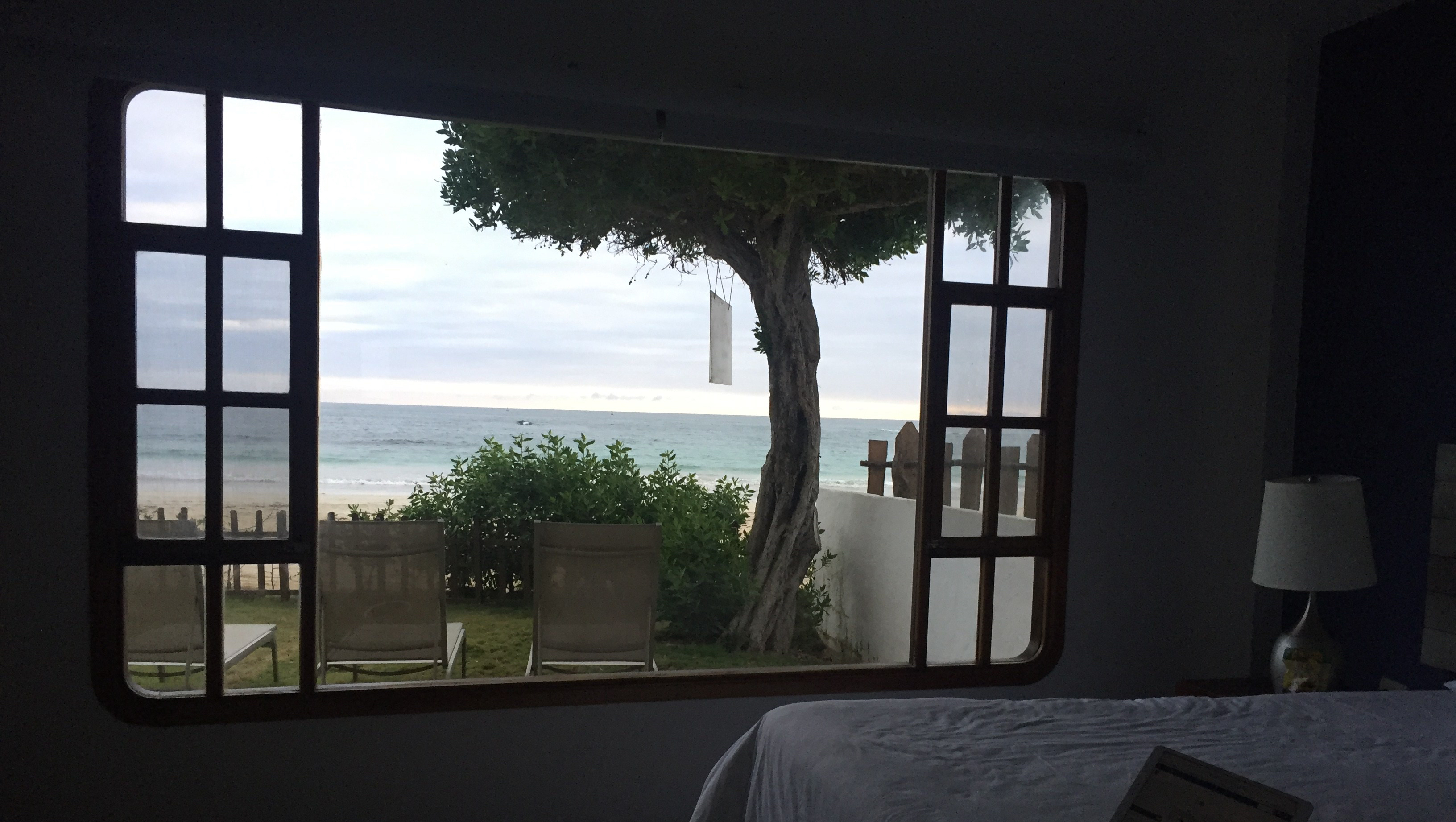
In Isla Isabella I planned on staying at a small hostel near the center but, when I walked towards the beach and saw its beauty, I could not bring myself back to the centre; it was just breathtaking. The hotels by the water are super expensive but I walked into different places to see what they had. One snobby receptionist suggested that I go back to the centre for cheaper accomodation but that I did not listen, of course! I soon found myself at the reception of this lovely boutique hotel, a super nice manager was happy to grant my wish to stay by the water and offered me their beach front room at great discount since it was already empty. Below is the picture of my perfect room; exactly what I imagined!
I could happily spend the next two days just enjoying the views and the beach but there were roads to be run and gorgeous places to visit. Among many things to do, I chose two things: a run from volcano Sierra Negra and a visit to the Los Túneles.
Ideally, I would hike up to Sierra Negra but I found out that it required an all-day long group tour tour or a private guide. The former, I did not have time for and the latter was expensive. Also, neither of these would allow me to do the long run I wanted to do. My alternative was to take a taxi to the entrance of the reserve where the volcano is located and run all the way back. I explained this plan to the girl at hotel reception so she could find me a taxi but she was very concerned and called her manager who spoke English. In the end I convinced them that I could run the distance and it would be safe. I had to have the same discussion with the taxi diver who was worried that I wasn’t going to have enough time because by the time we would reach to the entrance it would be around 4 pm and I would have to do a part of the run in the dark which was dangerous.
The driver, himself is a keen runner, said that he would have a coffee with his friend at the reserve and start driving back in about 1 hour to pick me up. I really wanted to run the whole distance but knew that it was sensible to at least have a back up plan in case it got dark. I asked if he could wait longer and he said ‘yes’. I felt sad that I was so close to the volcano yet too far to see it but once I started running my smile was back on and I knew that I had made the right choice.
The course was very hilly and the first section was a dirt road with lots of horses, then angry dogs. I should add that dogs in South america still freak me out each time they bark and run towards me. After about 3 miles on dirt road, I was running on a very hilly asphalt road surrounded by bushes/trees on both sides. Except for the occasional vehicle, with surprised looking drivers, I was alone and in my element.
About 10 mile into the run, the taxi driver coughed up with me but there was still more time to the sunset. He must have realised that I was keen to run and said that he would wait. When I hit 13 mile I saw his car again but this time decided to stop.
He was amazed and said that he was so proud. I felt bad sitting in his car drenched in sweat but he didn’t seem to mind. On the way he stopped at a turtle farm then by the lake to show me the turtles and flamingos; he knew I didn’t have much time the next day. When we returned, he refused to take any money but I insisted and in the end he accepted half of the fare that I paid on the way up to the volcano. I was very happy and ready for a nice meal by the water after shower and stretch!
I hear that shortly after my visit to the Island the volcano was closed to visitors because of the activity levels. This made me a little sad but I still preferred my run. Hopefully one day I will return and be able to hike up the volcano and who knows maybe run again!
I lost the camera containing all the cool pictures from the run. Instead, I share a video of the iguana that kept bothering me while I was resting in the beach (sorry for the shakey filming!) and a bird feeding its baby . Also some cool pictures from Los Tunnelles where I swam with sea turtles and saw a sea horse.
DCIM103GOPROGOPR4135.JPG
DCIM103GOPROGOPR4105.JPG
DCIM103GOPROG1194263.JPG
DCIM103GOPROG1304349.JPG
ISLA FLORENA AND RUNNING THROUGH THE FIRST SETTLERS’ HOMES:My final trip was to the mysterious Isla Florena which has housed some of the first inhabitants of the Galapagous Islands, it has a mysterious history as well because of the disappearance two of the early residents. (see this interesting article that my friend Isabelle shared with me recently: http://www.telegraph.co.uk/travel/destinations/south-america/ecuador/galapagos-islands/articles/the-secret-history-of-galapagos/ )
The brief story of the first residents is as follows: Herr and Margaret Wittmer escape from Nazi Germany in 1930ies and somehow decide to settle on the island with their son who has health problems. They settle on the Island and raise their family there. I found this account of Vernon Lenge who visits the Island in 1944 and meets the family members briefly. He is very impressed by the home they had made and how they survive on the Island including their elder son who was blind but still roams around the Island by himself. http://www.galapagos.to/TEXTS/LANGE.HTM
Among the very few hotels on the Island, I wanted to stay at the Wittmer hotel which is ran by Erica Garcia Wittmer, the granddaughter of Margaret Wittmer. I was the only guest at the hotel and had a chance to chat with Erica. She was excited to have a Turkish guest and said that she travels at least a few weeks every year and really hopes to go to Istanbul sometime. She prepared a fantastic breakfast for me.
The hotel is also a museum and has pictures of the first residents, many famous visitors and also has guest books signed by most of these visitors. It was incredible to sign into the guest book that many incredible adventurers also signed. These are among the lost pictures but I have found a few of the museum in the hotel.
DCIM103GOPROGOPR4572.JPG
DCIM103GOPROGOPR4575.JPG
I knew I didn’t have too much time to explore but I wanted to see the first settlers’ homes to try and gauge what sort of lives they might have lived. So, took the 3 pm Chiva to go up to Asilo de La Paz which is where the caves are located. *Chiva is a small truck converted to a public bus and it’s the the main form of transportation for the few Islanders and moves a few times a day from the centre of the town up to Asilo de La Paz (see the picture below).
I was the only one on the Chiva by the time it reached to the Asilo de La Paz and I realised that I would be walking around alone. Apparently the bus driver waits there until about 4:30 p.m. which is the last Chiva so, at least there was another person nearby!
Once off Chiva, to get to the caves you just follow the path through a large garden which is also home to a small reserve for giant tortoises. They seemed to be great shelters but I don’t know how comfortable a home it would be. Although from the account written by Vernon Lenge Wittmers’ made a good home out of these caves.
DCIM103GOPROGOPR4526.JPG
DCIM103GOPROGOPR4448.JPG
DCIM103GOPROGOPR4429.JPG
DCIM103GOPROGOPR4387.JPG
DCIM103GOPROGOPR4439.JPG
DCIM103GOPROGOPR4428.JPG
I also found lovely large tortoises who seemed to be really enjoying their life in this quite reserve and the fact that they had plenty of food to eat.
From the reserve, instead of taking the 4:30 Chiva back to the town, I decided to run. The Chiva passed me soon with the few passengers from the nearby farms. I still had the solitary sensation but had shook off the unease I had walking through the caves and the labyrinth alone.
DCIM103GOPROGOPR4487.JPG
Overall my visit to Galapagous was very enjoyable. I think that a combination of boat trip and independent visits worked well. Although I wished I had more than just 9 days because there were so much more to explore and to absorb on each Island I visited.
In terms of budget, I spoke to a few people who were visiting the Islands on a much smaller budget. Limiting the eating out by getting an accommodation with fully equipped kitchen is the big tip I had from most people I spoke. I think that if you also have time and energy to hike/cycle to places, that saves plenty of money on expensive island transport.
I am grateful for the time I had there and, like many other places I saw during this trip, I would like to return to Galapagos Islands again.
Final note, the suggestions of these incredible (but tough) runs come from my friend Isabelle who knows this part of the world like the back of her hand. She has helped me with the planning of the entire trip and clearly considers me a super woman because no other person would casually suggest that I visit a volcano then run back 30 km on hilly trail in these temperatures! Clearly she knows that I am a little mad but I love her spirit and will try to keep up with her crazy ideas. Lots of love, Isabelle!!
I have been travelling through Mexico City and Chichen Itza area for the past few days and being spoiled with great hotel stays. Great food, great stay in the middle of the jungle among palm trees but today, I was itching for a little adventure. So, we negotiated with a local taxi driver to drive us to this town about 1,5 hours away from where we were, checked into the first hostel we saw and went out for a good spot to watch the sunset. We found the perfect spot but also stumbled across these cool guys who were playing with fire! I just wanted to say, DO PLAY WITH FIRE AND GO FOR ADVENTURES, IT IS ALWAYS REWARDING!! Sending you all lots of love from Mexico and wishing you happy valentines!
I have been quiet for a while and still haven’t shared my Galapagos Islands, Cotopaxi Volcano and Bogota experiences. I should do this while I am resting my sore muscles from last night’s incredible race. In the meantime, I wanted to share with you this fantastic experience.
Having done too much running, hiking, climbing and my new hobby cross-fit, I was advised by a sports therapist that running a marathon now, would be a bad idea! However, passing the chance to run with the World Marathon Challengers was out of question! So, promising that I would rest after the race, I arrived in Cartagena with almost no prep but lots of excitement!
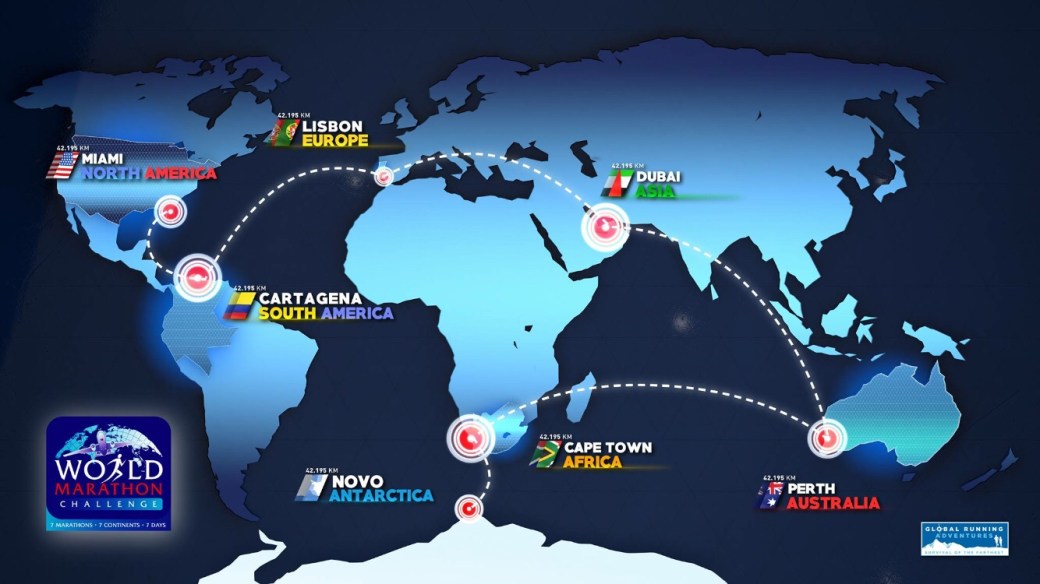
I should pause here briefly and add the following info: World Marathon Challenge (WMC) involves running 7 marathons in 7 continents and in just 7 days! It is a huge logistical challenge for Richard Donovan as the organiser and a tremendous physical and psychological challenge for the participants as it involves nearly 200 miles run and thousands of miles of journey time; all in just 168 hours! This year’s course was as shown on this map:
Richard has generously agreed for me, David and Chiara (all members of Antarctic Ice Marathon 2017 team) to join the World Marathon Challengers on their 6th continents.
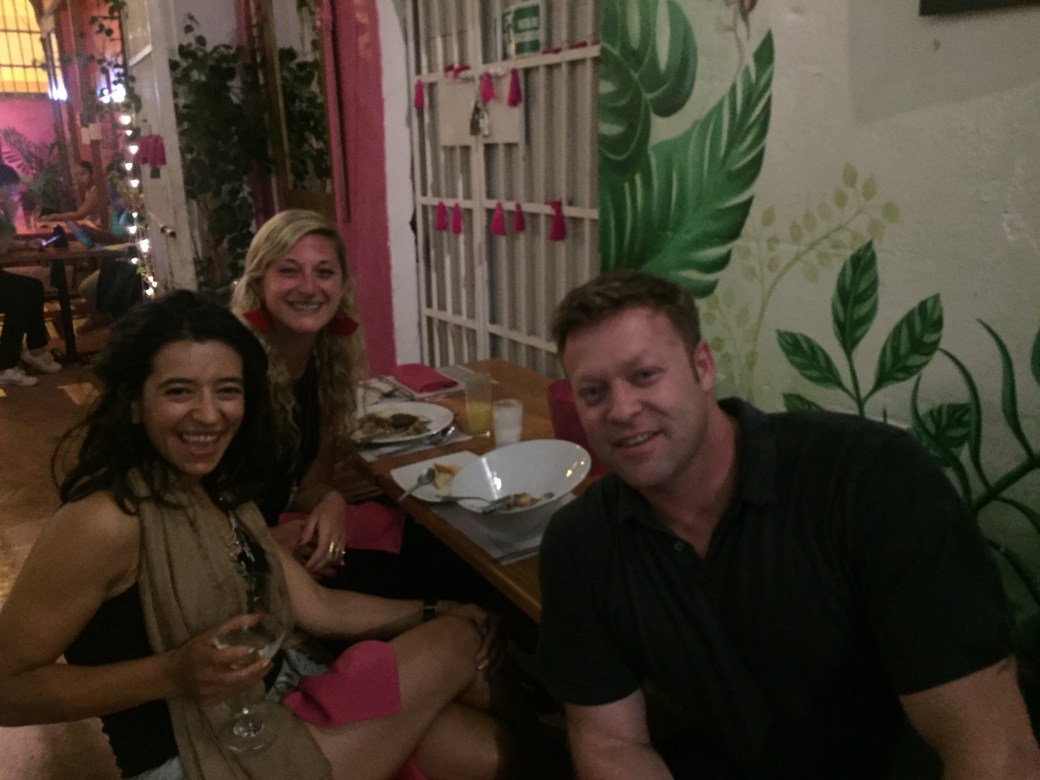
I flew in on Saturday and met with Dave and Chiara. We had a great pre-race dinner at Restaurant Interno which is located inside the Cartagena San Diego women’s prison and is run by the inmates. The restaurants is among the top fine dining spots in Cartagena and the women are certainly doing a great job. It provides great dining experience and helps inmates gain skills and successfully integrate into the society.
The next day we met at Dave’s hotel for breakfast and after a few hours by the pool headed to my hotel which was near the start line. We were all nervous and had different physical troubles but supported each other whilst getting ready, just like we did in Antarctica.
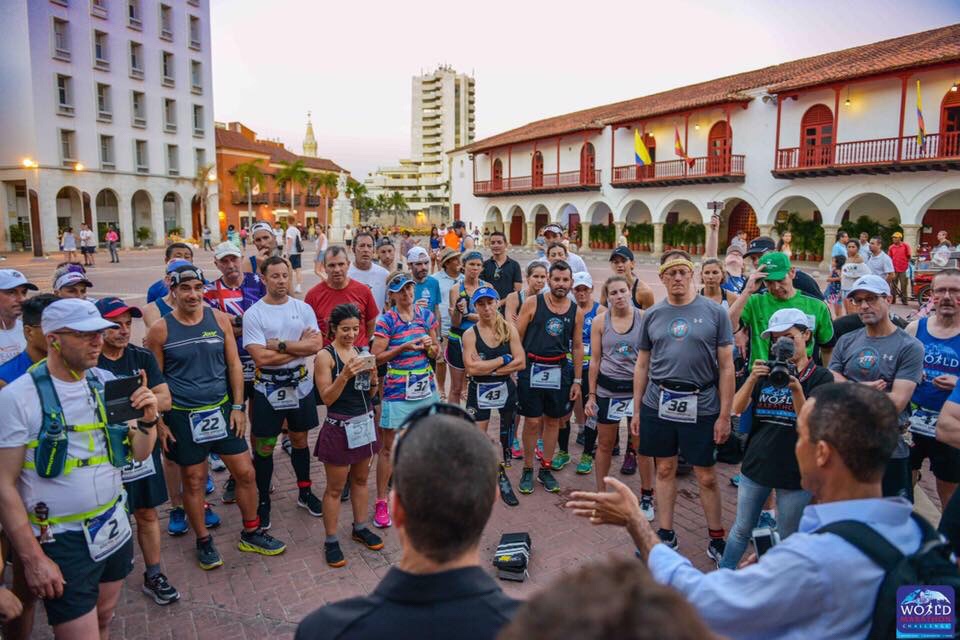
The start was delayed from 3 to 6 pm local time which meant that most of the run was going to be in the dark. Once at the start line, we hugged the friends who had been running for days and wished everyone luck. Then the start signal came and we were finally running!
There were some issues with the marked course and some of us went off-course at the beginning of the race. This meant that later on, not only we had to make up for the gap but most of us ended up doing at least couple of mile more than 26.2 miles. Ignoring this, the tourists and the heavy traffic, it has been an epic race. The heat and the late night timing wasn’t great but every time my body gave any fatigue signal, I was humbled by the sight of a WMC participant and reminded myself that they were doing this run on top of 131 miles that they have already done.
The support staff were brilliant and enthusiastically cheered and replenished us at various spots until late at night. I had the chance to run with many race participants. Russian/American runner Gulzhamal was just full of positive energy, and despite the miles that her legs had already covered this week, she had a huge smile that gave me lots of energy.
In the end, 28 miles and 4:50 minutes later, I made it to the finish line happy and very much content with my achievement.
People keep asking me why I run marathons, I think the simple answer is “love”. I love the challenge, the unpredictability and effort you must put into every race and the happiness that comes as a reward. Some people’s marathon is a 3 mile run while for others it is nearly 200 miles. No matter how many marathons you have under your belt, each is a completely different challenge and unpredictable in its own way.
As I write this, the WMC challengers are in the middle of their final marathon in Miami. My heart is with them.
On the one hand, I think that the New Year, the calendar count is just a number and we should not wait until January to reflect and make changes in our lives. On the other hand, I always find myself reflecting about the year past and year ahead this time of the year.
Earlier this year I found this diary entry from a few years ago. Not written around the New Year but it contained a list of the things I wanted to do. When I read the list I realised that most of the things I had written down had in fact come true; this realisation made me cry (out of joy!).
2017 has certainly been one of my best years. Great holidays with friends, running marathons, completing my first ever triathlon, finally taking 6 months sabbatical from work and finishing the Antarctic Ice Marathon were my key highlights.
The few things I think that I have learned this year are that I must try to do whatever I want now, instead of postponing, that my health is the most important wealth I have and that instead of complaining that I don’t have somethings I should make plans to realise my wishes. I mostly adhered to these rules which I belive made the 2017 a great year for me.
I celebrate the year by sharing some of my favourite photos from 2017. Grateful for the love and support I received from my family and friends. Sending you all big hugs from South America.
After my visit to the lovely floating islands in Peru, I took a flight to Quito via Lima. My friend Steve was visiting from London only for five days so, I decided to do whatever he wanted in the few days we had!
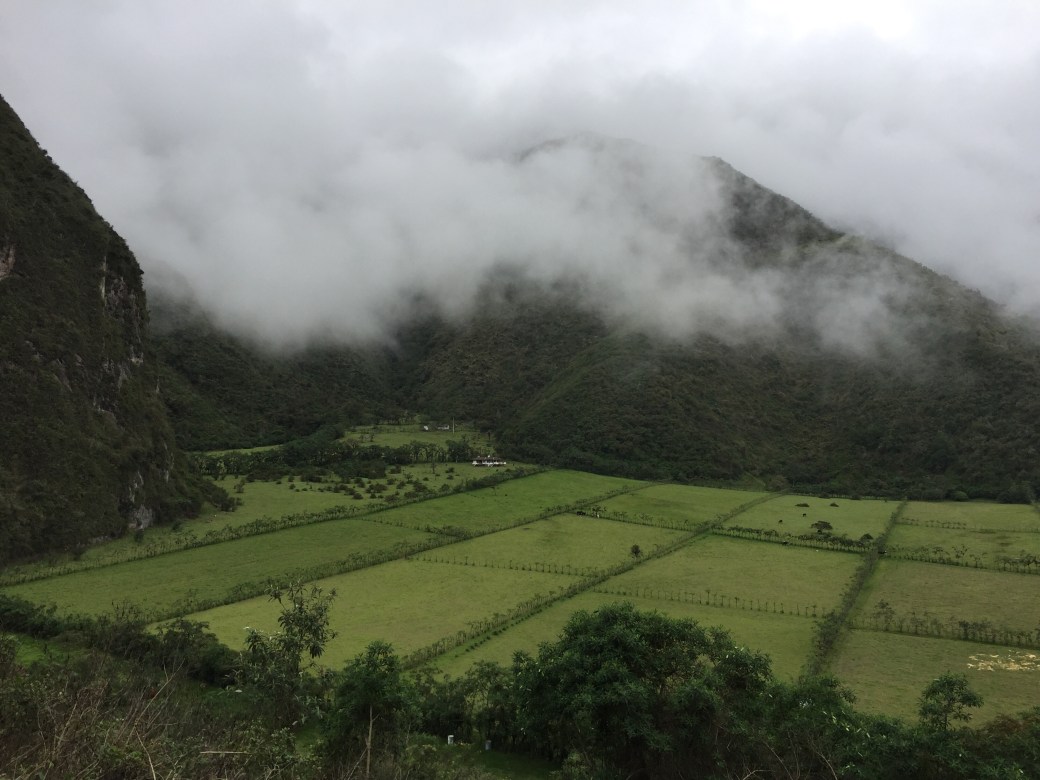
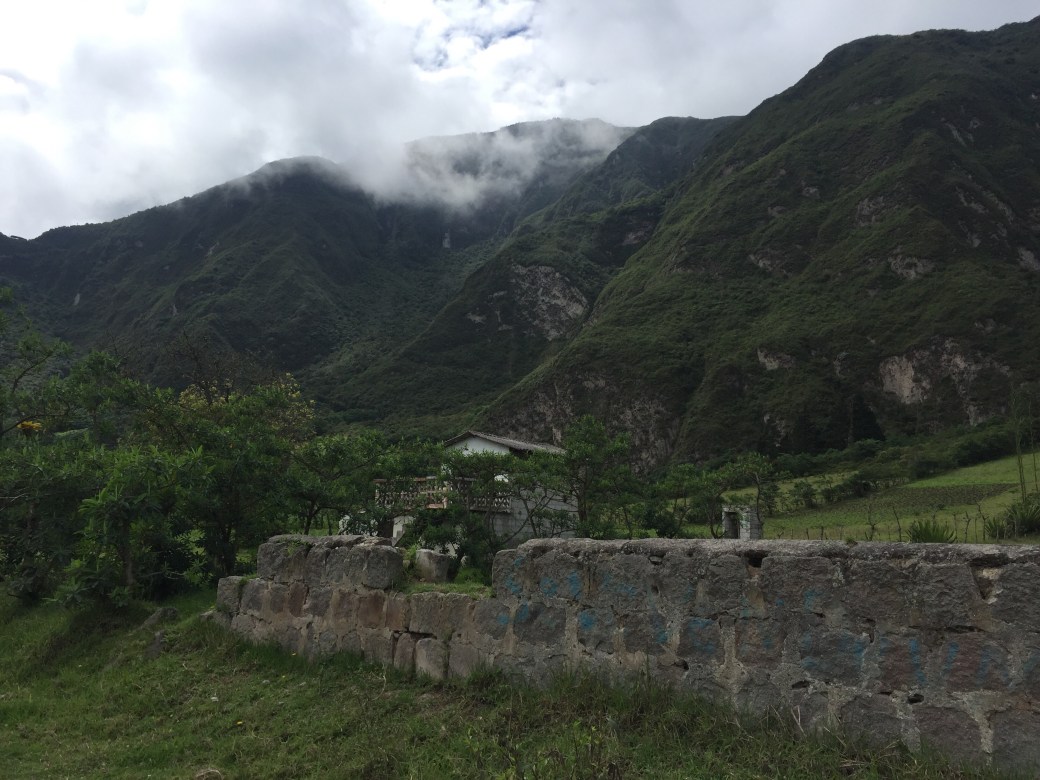
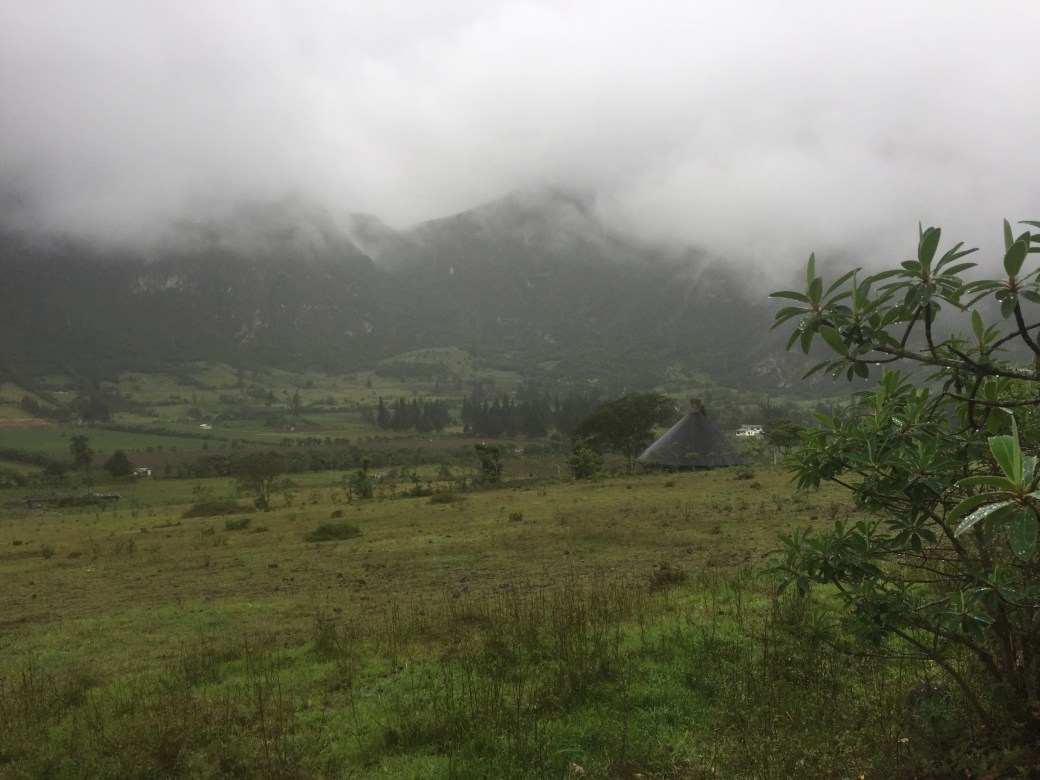
First couple of days were spent in Central Quito to allow him acclimatise then we headed to Pululahua Volcano. I didn’t know much about the location but it turned out to be a fantastic choice to spend a few days. Apparently the Pullulahua volcano is one of the two inhabited volcanic craters in the world and the only one that is farmed.
My contribution to the trip was the El Crater mountain lodge I found and it was perfect because it had spectacular views of the crater especially when the fog (not uncommon due to microclimate here) lifts.
Having dropped our bags in the lodge, we spent the afternoon of the first day visiting the nearby Mitta Del Mundo (Middle of the World) which marks the Ecuador line that divides northern and southern hemisphere of the earth. Well, almost literally, as it turns out the measurements taken during the construction were off by a few hundred feet.
Every official in the area is almost trained not to direct you to the exact location, which is a much smaller museum. In any case, it’s a fantastic memorial with lots of entertaining high school science experiments and amazing exhibition on the local cultures that lived in the area.
Our next day, the New Year’s eve, started with entry into Pululahua reserve next to our lodge and a descent into the crater. Only about a mile but the descent was so steep we wondered how we would feel climbing back up. However, we were fast and decided that it would be easy as we were going to have an easy day. Little did we know that we would need the last bit of our energy on the way back!
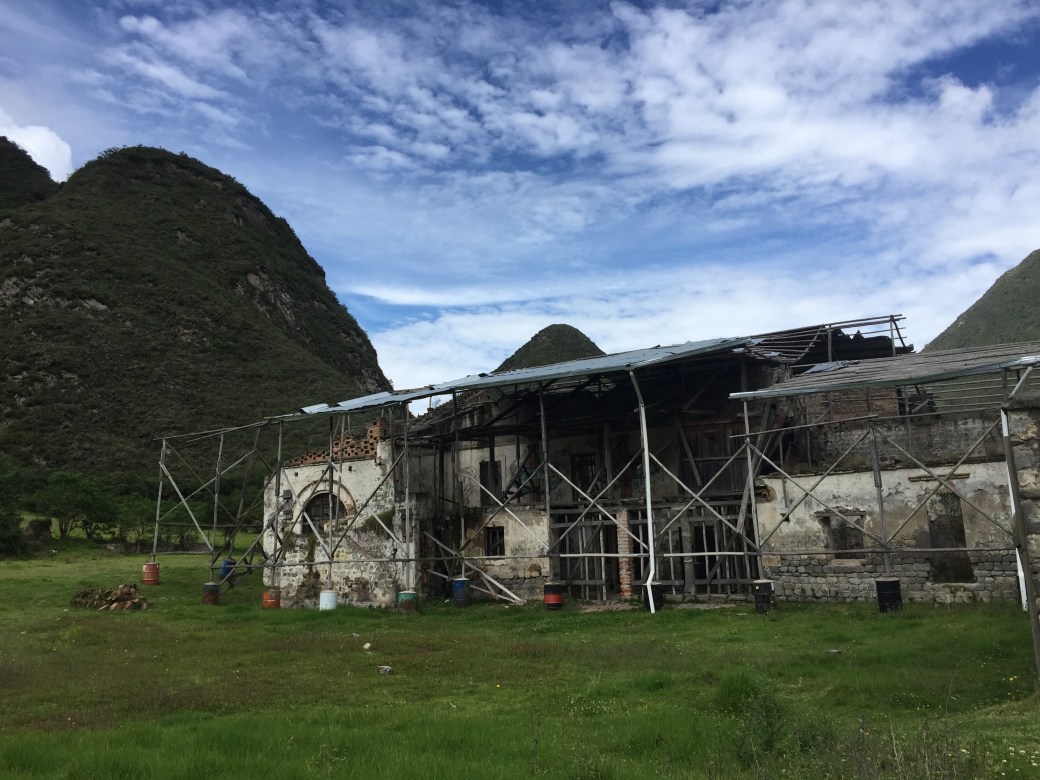
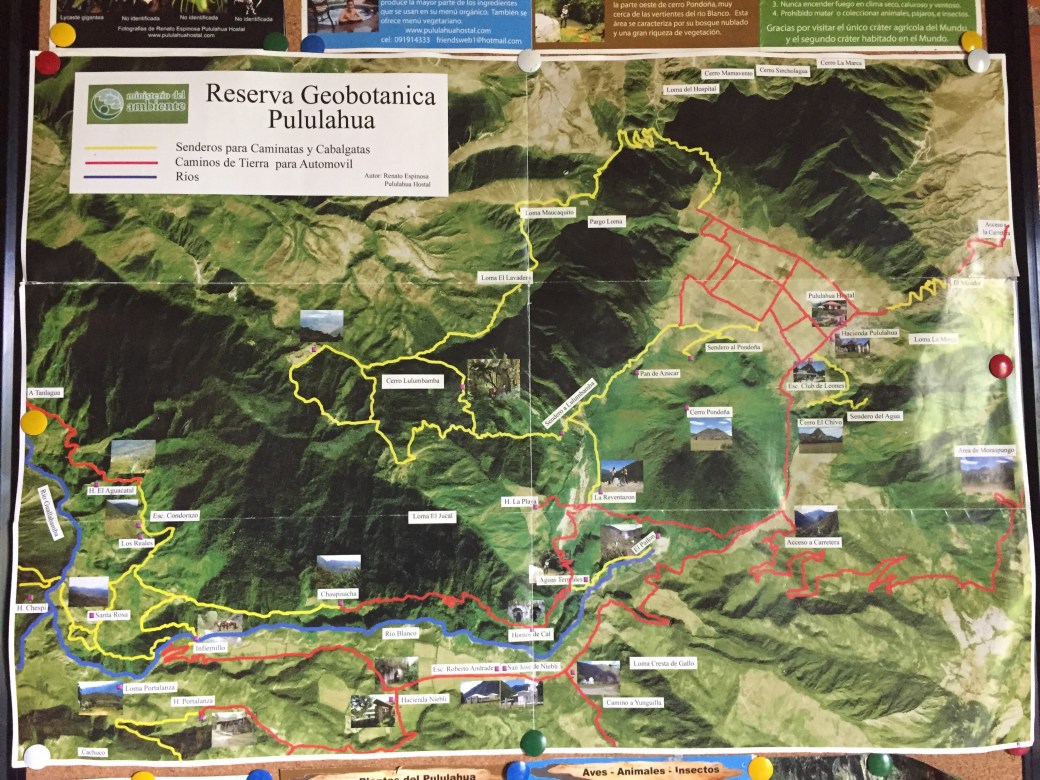
Once inside the crater, that is home to large farms (including some very old ones), we thought we would climb couple of the marked hills. We asked around for maps but apparently one doesn’t exist. Luckily one hostel inside the crater had a framed map which looked like a Hike route map. We had no idea how old or accurate it was but I took a photo of it with my phone. Later in the day this photo of the map would become a treasure to us!
The first climb was through the El Chivo trail. The sign said 1 hour but we made it up in 40 minutes and, after enjoying the views for about 30 minutes, took 25 minutes to get down. This gave us the confidence to climb the much bigger hill which had 2 hour climb-up time on the sign. Before this second climb we stopped (rather, were stopped) to eat lunch at a local place.
The owner was insistent but the food looked decent so, we didn’t resist. I had delicious grilled fish and coca-cola. The other guests (a large ecuadorian/colombian family) were great lunch companions.
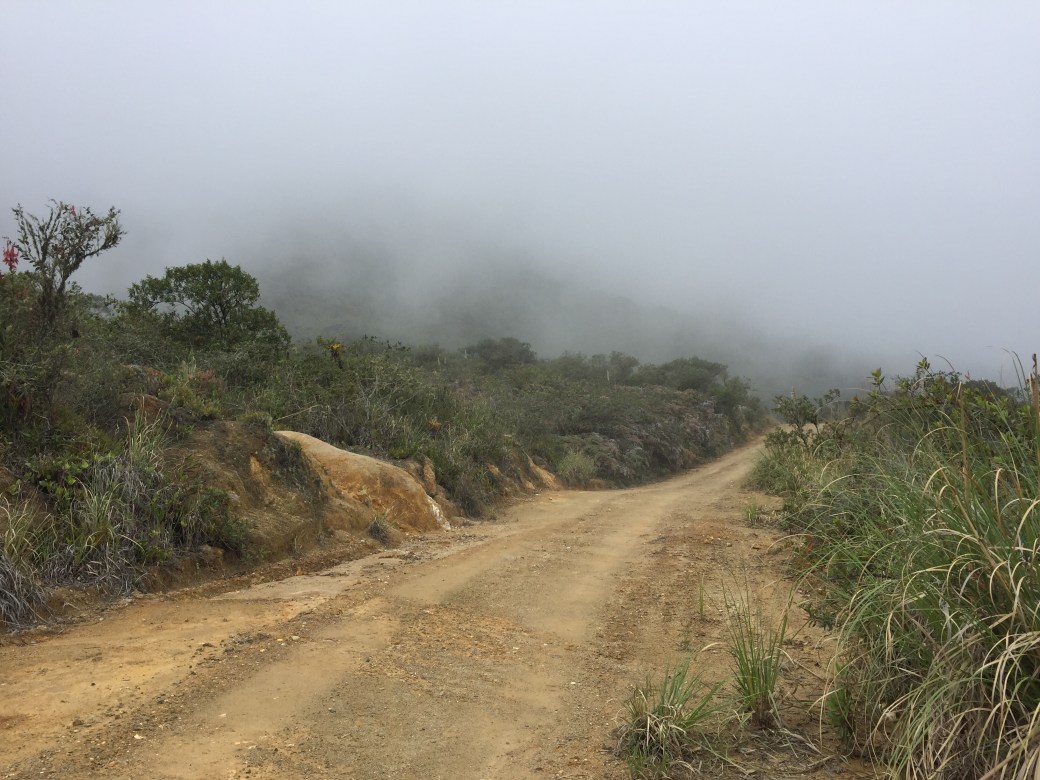
Having figured out that we had good time to climb-up and get down the big hill, we started the walk rather relaxed. But soon realised that there was in fact no path up, at least none that we could see. So, at first we walked back but there seemed to be no other way than the dirt road we were walking on. This road went around the hill and our rough map also indicated a long but clear path.
So, we decided that we still had enough day light ahead of us to make it around the mountain and hopefully find a path above it. My watch was measuring how far we walked, we we had no idea how much the actual distance ahead. Although we estimated it to be about 10 k so, we thought that we would walk fast and have no problems!
After a while we bumped into this American guy who was on horseback and had a dog. We chatted with him briefly. Apparently he was travelling for a few months only but decided to spend the last couple of years living in a farm in Ecuador. He was trying to get to the crater where he would camp overnight to celebrate the NY. He was crazy but hey, I’ve seen enough crazy in the past year! So we smiled and wished him good luck.
We were clearly so awed by this guy that we missed the very obvious right turn and just continued ahead, only to end up at a dead-end. First, we tried to find another path over the mountain but the terrain was getting rather dangerous and, with no camping equipment or food, it would be foolish to continue.
We decided that the safest thing was to return but then, we soon saw the right turn that we had just missed whilst talking to the guy.
Studying the photo of the map from on my phone and using my hand compass (a christmas gift from Steve to encourage me to use a manual one), we knew that this was bound to be the right way up. The only thing left was to keep an eye open for another right turn marked on the map. However a few kilo-meters of painful climb later we were at a dead-end again.
Now desperate, while Steve was studying the area I decided to walk back a few hundred meters to see if we missed a turn. Thankfully I did because I saw hidden path that we had just missed. My compass indicated that this path was heading in the direction we wanted to go so, we just pressed on. Soon we were climbing up through a very narrow path that was cut into the mountain side. We felt completely enclosed on both sides and I felt quite claustrophobic for some moments. Although we were both exhausted and could feel the effects of such fast climb in high altitude, we just wanted to climb out of this tunnel as soon as possible.
In any case, returning was out of question because our last few miles and the ascent back up would be in the dark and that was dangerous.
The path was long but we had successfully managed to pass over to the other side of the mountain and were once again on a clear path.
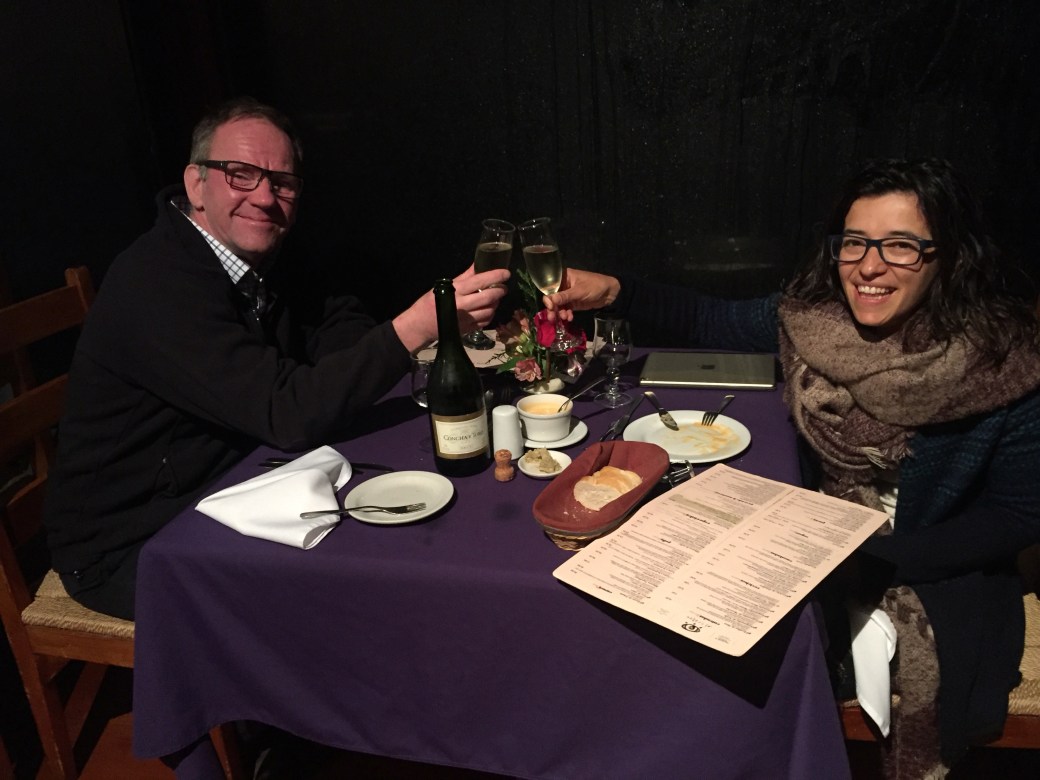
By the time we were at the botttom of the hill we climbed down this morning, it was already New Year in Istanbul with just one hour to go for the UK. We managed to climb up and returned just in time for the UK New Year. So happy we ordered a cool bottle of champagne which was well deserved.
Unfortunately I barely kept my eyes open past 10 pm local time but fell asleep super happy and content. I have this belief that the last hours of NY eve should be spent doing what I like to do in the New Year. So as far as this belief is concerned, the New Year shall be full of super tough but fun and rewarding activities and plenty of sleep. I would love that so, 2018, bring it on!!!
I shared my friend Matthias’ brief description of the life on these floating Islands. I understand that there are about 95 floating islands each of which owned by a family. Each Island is home to at least couple of generations of a family.
What struck me was the amount of hard work the people have to do and this story, I think, is a good example:
Shortly after having been welcomed to the Island, I am sitting at the lovely terrace enjoying the view when the family starts moving a few things around, including the view tower. Soon, all men and women of the family start offloading this massive pre-built house from the boat onto the Island, apparently it is their new kitchen and there is also a new small toilet!
Seeing all of them at work I offer if I could help, they are hesitant as I am a guest but quickly accept the offer. Soon, I am joined by Matthias and two other guests and we are all pushing and pulling as instructed, to move this huge new kitchen.
They are using a method whereby they lay long logs underneath the structure and with the ropes attached to both sides we pull from one side while the other side pushes the same. Then we all move to the other side to do the same and repeat it all again. A few cm at a time and it takes us good two hours.
We, tourists, are concerned that by the time the kitchen is fully moved it will break into pieces but finally, after about 2 hours of effort, we successfully offload the kitchen from the boat and move it to the ideal spot identified by Felix and his wife Milagros.
I realise how strong all family members are especially Milagros’ father seems much stronger than his son in law, Felix. There is no gym or fitness facility but the reality of their lives that require them to physically work every day. Even their youngest Axael, who is only 6, is excited about the work and surprises us by his strength.
Overall, I envy them and feel that their way of keeping fit is harsher but more natural than our artificial gym sessions. That’s of course all we have and I do greatly appreciate this luxury in my daily life. However, I cannot keep but wonder how different our lives would be if we all needed to make a little more physical effort that is actually “necessary” instead of forced!
My respect to this family and their way of life has increased every minute I was able to observe them. When I saw Milagros’ grandparents, who also live in a small hut on this island, I almost had tears in my eyes watching them lying down next to each other and chatting for hours as if they’ve just seen each other after a long time. I could not help but wonder if the secret of their happiness was this luxury of a simple life in this magical place!
Final note of 2017 as summary of the my great year is coming up next…
After a fantastic visit to the Bolivian side of Lake Titicaca, my road friend and I arrived in our final destination Puno, on the Peruvian side of the Lake Titicaca.
I had read mixed reviews about Puno and did not know anything about the floating islands or the Aymara community that lives there. However the place was on Matthias’ list and I agreed to join him before heading to Arequipa for my flight.
Once we looked up the place properly, we realised that it would make more sense to stay there than just have a day trip.
The local population has adapted the necessary evils of a modern life, like wifi, but are strongly maintaining their traditional way of living from hundreds of years ago. This means that their life is hard and they have to work very hard almost every day. One example of this is the short story I will share about the work we all had to do to move their new kitchen onto their tiny floating Island. The other reality is that, whilst the summers are very pleasant, the winter is harsh for them as they have limited heating facilities. My other observation is that their living space is very small. I could see that this could be a big problem in the winter.
I was happily surprised by their sophisticated booking system and superb customer service.
I will not tell you about the Island myself because Matthias has offered to write about it in (Swiss) German and in English. I am sharing the story as written by him. I will however write about the crazy effort we all made to help the family to move their new kitchen to their floating Island. Here is Matthias’s description of the stay on the Island both in English and German (I have translated it to Turkish).The photos are also from his sharp camera.
Thank you Matthias!!
The Uros have been living on Lake Titicaca for generations. As a livelihood they build small islands, which usually spends home to one or two families. The islands are built from the plants in Lake Titicaca, a sort of reed plant, which allows a very robust construction. The islands offer enough space for more than ten cozy cabins.
Originally the visit to the Uros should have been a daily trip. At the last minute Gülay and I decided that we wanted to stay overnight on the islands. The reason for this was a hotel entry on Booking.com, which marks a point directly in the Lake Titicaca on the map. A hotel with electricity, Wi-Fi, breakfast and all desirable amenities in the middle of the Uros? We should not be disappointed. But first we had to make our way past all the shameless tourist hunters, all of whom are just waiting for them, like vultures, to sell a supposed bargain to an unsuspecting tourist.
From the bus terminal we could walk well to the dock for the boat transfer to the Uros Islands. The large pieces of luggage we left in the depot at the bus terminal; a decision, which we should not regret and gladly recommend. There is a tourist boat at regular intervals to the Uros. However, these boats are rather intended for daily trips than for overnith stays, accordingly we had to free ourselves first from the foreign-determined tourist stream. We were taken to a small island where “el presidente”, as he called himself, explained that all happy tourists would book a tour for $ 30. The malcontents would have to wait for him in the boat. Since we really wanted to go to the hotel, we told the “el presidente” that we now want to continue to the hotel, as we were promised. El presidente clearly lost interest in us, which immediately made us realize that we had to take our luck into our own hands. Luckily, the ship’s captain helped us. He called the number given in the reservation for the hotel. We had to wait 10 minutes until Felix and Axael came to pick us up with a boat. They took us to the Sol y Luna Lodge, an island with beautiful reed houses. We immediately fell in love with the piece of idyll.
Felix lives here with his family and offers a total accommodation for 12 guests. The peace and idyll on the island is unparalleled. A few chairs and umbrellas made of reeds, offers comfort and also allows a few hours of sunshine in a deck chair. The family of Felix welcomed us warmly. The little Axael was particularly impressed by the Charango and immediately accompanied us musically. We were presented a cozy hut overlooking the water. Because we were hungry from the trip, we asked for something to eat and a bit later we got delicious corn with potatoes and chicken. In general, the kitchen turned out to be simple, but delicious and rich.
At the Sol y Luna Lodge we were able to switch off and let ourselves drift in the truest sense of the word. The mood and the atmosphere are unique and the joie de vivre of the Uros is contagious. It was a great and unique experience.
1. The Uros Sol y Luna Lodge offers a total accommodation for 12 guests and the overnight stay is a unique experience.
2. Given the circumstances, the comfort is very high: Comfortable sleeping huts, electricity, Wi-Fi, clean toilets, lounge and a lookout tower are available.
3. The food is tasty and well tolerated even for foreign stomachs.
4. For the outward journey, it is advisable to contact the family directly by phone. The family speaks English well.
5. A stay of several days is definitely recommendable. The lodge can also be visited as a family with children.
The after the bike ride on Death Road I planned to take a bus to Copacabana by lake Titicaca to visit the nearby Isla del Sol before heading to Puno. Couple of days prior, I had met Matthias who was also travelling in the same direction. We decided to take the same bus and ended up visiting almost all the sites together. He’s turned out to be a great travel buddy!
The journey from La Paz to Copacabana is about 4 hours. Halfway through the ride you get off the bus and take a 10 minute journey on small boats. You reunite with the bus which is transborated on large floating boats and carry on for another hour or so.
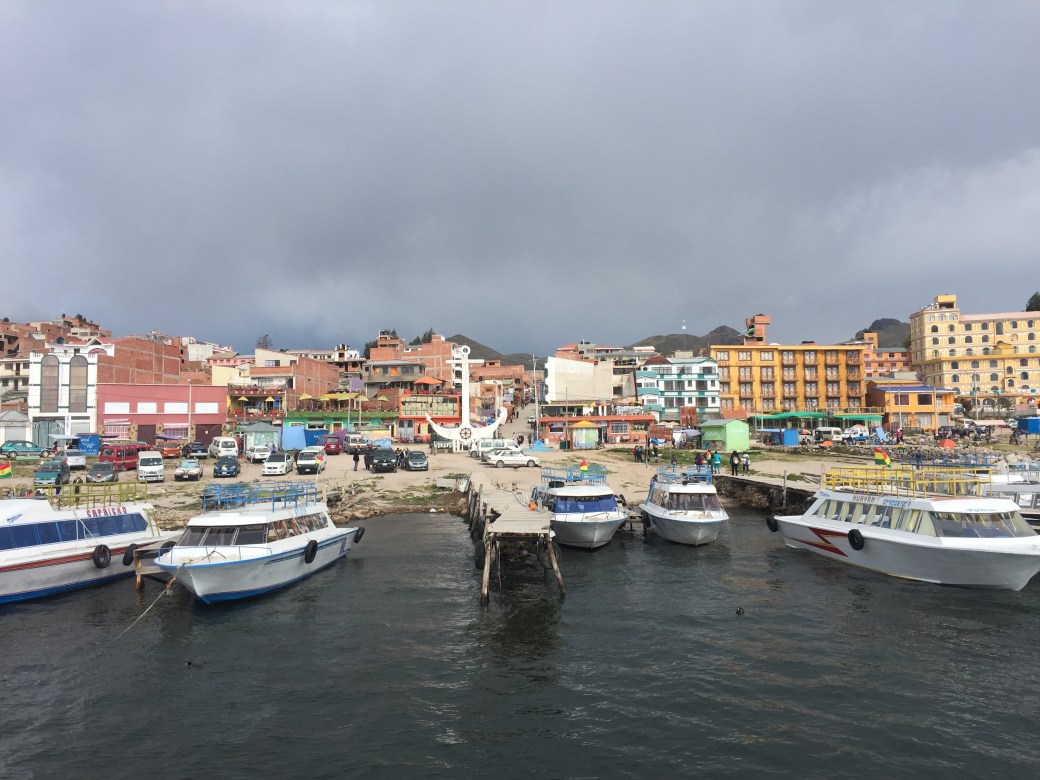
There is not much in Copacabana but it’s a good base to explore the nearby islands on the Lake Titicaca. However, the views of the lake is just gorgeous.
Standing by the Lake Titicaca, you could be forgiven to think that you’re in a small fishing village at sea level. However, doing a hike up to the Cerro Calvario, which is a big hill overlooking the town, you are quickly reminded that the lake is above 12,500 feet. Matthias being a climber (apparently with a genetic condition that makes him adaptable to high altitude) and me a fitness junkie who is now well acclimatised, we enjoyed a very fast uphill climb.
Cerro Calvario is a monument that represents 14 stations of the cross. Given that it was the morning of Christmas eve, there were many pilgrims making their way uphill. The hike is worthwhile even if you’re not a pilgrim as it gives spectacular views of the lake and the islands.
This local boy let me hold his cute puppy. It was such a warm, playful creature, after a while I reluctantly returned him.
After the hike and a quick lunch, we made it to the boat heading to Isla Del Sol. I was very keen to get there as had seen the amazing photos and knew to expect an untouched nature thanks to the ban on motor vehicles. Also, apparently it is possible to walk from one end of the island to the other and still see amazing Inca ruins. I wanted to run the distance instead and spend a quiet Christmas day there.
The boat journey takes about one hour. Once on the boat, we were asked to climb onto the upper deck. It may not be the safest thing to do with backpacks but the journey was great fun, especially because there was a group of Argentinan guys with a guitar playing cool songs. They even played a Manu Chao song I asked for!
On arrival we were greeted by bunch of donkeys and sat at a lovely cafe to figure out where we would walk etc.
There we received the bad news: due to an ongoing conflict between the north and the south part of the island, we cannot go beyond the marked sections. It was hard to get a straight answer from the locals about the cause of the conflict and the exact danger (if any) should we attempt to pass to north. From a little research online I discovered that the issue relates to some land dispute and the southerners are not willing to share tourism with the north and destroying their infrastructure. It appears that the south is preventing us from getting to the other side (rather than northerners not allowing tourists).
Looking at the map, this means we are restricted to just one third of the island and cannot access the museum or any of the inca ruins, all of which are in the north. Not to discourage the tourists this information is kept secret until you arrive to the Island.
I was also disappointed that I was not going to be able to run the entire length of the island as planned.
The only thing left was to make most of the available section. Thankfully the place I chose to stay (La Estancia Eco Lodge) was far away from the town centre and once I entered through their gate, I completely forgot about all the bad news! This place was a complete heaven. Each room is built in a way to give full view of the lake and there is a magical, peaceful silence only disturbed by little birds.
The dinner included fresh trout from lake titicaca, I was impressed by their sophisticated range of wine and the quality and presentation of the food (even the bigger Island Copacabana didn’t have this). Their cozy fire place, board games and playing cards meant we all had a very cozy Christmas.
The next morning, again joined by Matthias, I attempted my run to see how far I could go towards north. The start of the run was steep uphill, I had hoped that the trail would flatten but soon I realised the whole way would be up or downhill. In fact soon we were jumping up and down different trails, even climbing rocks. The normal trail going north was blocked by the villagers holding. So, we wanted to steer away from them to avoid unpleasant discussions therefore found ourselves on this difficult terrain trying to run. Soon I accepted that this mostly a fast walk and ignored the 15 minute miles on my watch.
Once at the level of the lake, we saw this unmanned control point and passed walking on the rocks alongside the water. Soon the rocks started growing steeper and more slippy. I was curious to see how far we could get but Matthias sensibly warned that there was no point in going further because on the map we could see the cliffs were getting higher. Falling from one of the rocks, we would find it hard to get any help. Besides I love my “busy feet” and would like to do more runs! My only regret was that I didn’t carry a camera to capture the beauty before me and really hope to return there soon to do so.
Running the same way back, by the time we finished the run my watch was showing 9.5 km but nearly 2 hours time. Given the difficult terrain and the amount of time we spent jumping between rocks like small children, this was in fact rather fast. The remainder of the afternoon was spent at a good lunch spot before we had to race down in the other direction towards the boat that would take us back to Copacabana.
I was very disappointed about the conflict and I could not help but feel sorry for the northern side of the island which seems completely isolated despite being home to all the ruins and the museum. I do hope that they resolve the issue and I can go back to complete my original plan of running the entire length of the Island without having to hide and negotiate dodgy rocks and cliffs.
My next stop will be Puno and the floating Islands.
Greetings from Galápagos Islands! I moved from Bolivia to Peru then Ecuador. I’m yet to add my Christmas and NY posts but wanted so share these pictures with you in the meantime. I’ve been loving my encounter with various animals. Here are some 🙂
The North Yungas Road leads from La Paz to Coroico. It was named the “death road” or “world’s most dangerous road” in 1995. One reason is that on average 200 to 300 travellers were killed every year on it. It starts at an altitude of 15,260 ft at La Cumbre Pass and descends to 3,900 ft at the town of Coroico, transiting from very cold altiplano terrain to rainforest. Although it is now mostly abandoned to adventurer cyclists, it remains dangerous and at least one person dies every year still.
So, you wouldn’t be surprised to know that I have been thinking about this adventure for a while but wasn’t sure if I would take the risk especially as we are at the start of the rainy season in Bolivia. Yesterday (21st December), after having done a somewhat dissapointing trip to Tiwanaku, I decided to walk by the Gravity biking company to find out about the bike ride and whether it is safe etc.
Despite costing twice as much as their competitors, I decided to go with them and parted with USD 124 and, most importantly, all kind of legal claims against the them in the event of a death or injury. The event is risky and all you’re promised is a good bike with hydraulic breaks and good guides.
Having joined with the rest of the group and our guides at 7:30 in the morning, we started driving to Lake La Cumbra at 4650 m altitude which was the start point of our ride. There we were given our bikes, helmets and gloves.
The first section of the 57 km ride was the 20 km tarmac, towards the start of the death road. At one section is a 600 m tunnel which, after the death of a rider was considered too dangerous for bikers. Instead, we had to ride around the tunnel on a very narrow road full of gravel and rocks (which is even more dangerous than riding through tunnel!). It’s the most difficult section of the journey to the death road. I had to keep reminding myself not to use the brakes and just to let it go. I struggled but did manage without a fall.
The start of the death road is very clearly marked and I took a picture right under the sign.
The road is only maintained in the event of land slides which are bound to happen this time of the year. Although the road is still open to traffic, the new and safer road is used by majority of drivers. As far as I can see only our support vehicles and and vehicles coming from some of the villages use the death road and it is otherwise abandoned to adventure cyclists and the occasional hikers.
The 37 km journey is broken into sections of increasing length which gave us the chance to get used to it. The first section was rather short, 2 km, but certainly felt the longest. I was squeezing the brakes very tightly but not too much as they could very easily throw me off head first.
Then 4 k then 5 k more before we stopped for our first break. This was about 1 hour into the ride and my arms were burning from the vibration. At that point I thought it was a good time to check with our guides whether I could run the next section (which was 4 k according to one guide and 5 k according to the other). I hoped that it was 5 k so I could get my 5 k goal in. I skipped the snacks and got changed into my running shoes and got rid of the bike outfit for the time being.
The run was downhill, lots of gravel and rocks on narrow roads and going through small waterfalls. I was loving it even more in running shoes and glad that I was not negotiating this section of the road on the bike. As I hit 3 miles I started wondering if I had run too far but I knew I had not passed the described rock, so I kept running. Minutes later the front section of my group caught up me and our English guide told me that there should be about 2 more km to go.
I was delighted that I could run longer but my plan to be filmed whilst running by the other guide had clearly not worked because they were well behind. I even passed the first group and this time stopped at the described spot having marked exactly 7.2 k according to my Garmin.
The group arrived and I was cheered for running faster than all riders on the road but I knew that, for me, running is easier. As we were nearly 1500 m lower than when we started, I only picked up the bike jacket, helmet and left the big boots and bike trousers in the van. The next section was about 7 k and it was one of the most difficult sections because it was the steepest and had either lots of gravel or huge rocks. I was the slowest of the group but happy to be in full control of the bike despite the occasional near falls and slips.
We all had a break at our penaltimate stop for another quick snack, the next section was a combination of steep downhills but on relatively better surfaces and a 3 km section slightly uphill where I felt I was in my element and even overtook the chinese couple who had overtaken me at dangerous spots along the way.
The very final part was a combination of flat, down hill and slight uphill. We were told to look for a coca-cola sign from which point we had to significantly slow down as we had a sharp left coming up. The advice was that if we passed the coca-cola sign and saw the sign for an italian restaurant, we hadn’t managed to slow down enough and we’d be collected from the nearby ditch! Luckily I spotted the coca-cola sign just in time and managed to shout “coca cola!!!” for the bikes behind me. Our very last section was uphill and I was in the lowest gear and happy that I could overtake people.
Other than minor falls and scratches and one flat tyre, the whole group made it in one piece.We were all muddy, sweaty but happy, especially after being served cold beers. I chose to shower before having the buffet lunch/dinner and proudly wore my survivor tshirt. On the way back we stopped at a section of the new road and looked at the death road from afar. I cannot believe we made it!
The conclusion. I loved the whole journey and seeing the incredible cliffs covered with thick clouds. Despite rain, mud, gravel and painful arms I think that I would return; ideally with some more downhill mountain bike riding experience. As for running, that was my favorite part still and I would happily run the entire road in one go.
If you are in Bolivia and would like to do it, my recommendation is don’t hesitate; especially if you don’t mind being slow, it’s highly likely that you will enjoy it. Along the way I often found myself thinking how lucky I was to be doing the ride as a choice of adventure rather than a mandatory journey. My prayers and thoughts go to the thousands who died there whilst working or taking the dangerous journey which was the only way home or to loved ones.
With the last activity of my 5 day stay in Bolivia over, tomorrow morning I will make my way towards Copacabana which is the final destination in Bolivia before I must rush through Puno and Arequipa to meet my very good friend Steve in Quito. I am going to skip most of Peru but I plan to get back into the country after Steve leaves.
 Bingol in Eastern Turkey, Istanbul then London where I currently live and enjoy an active life. Running and travelling are two big passions.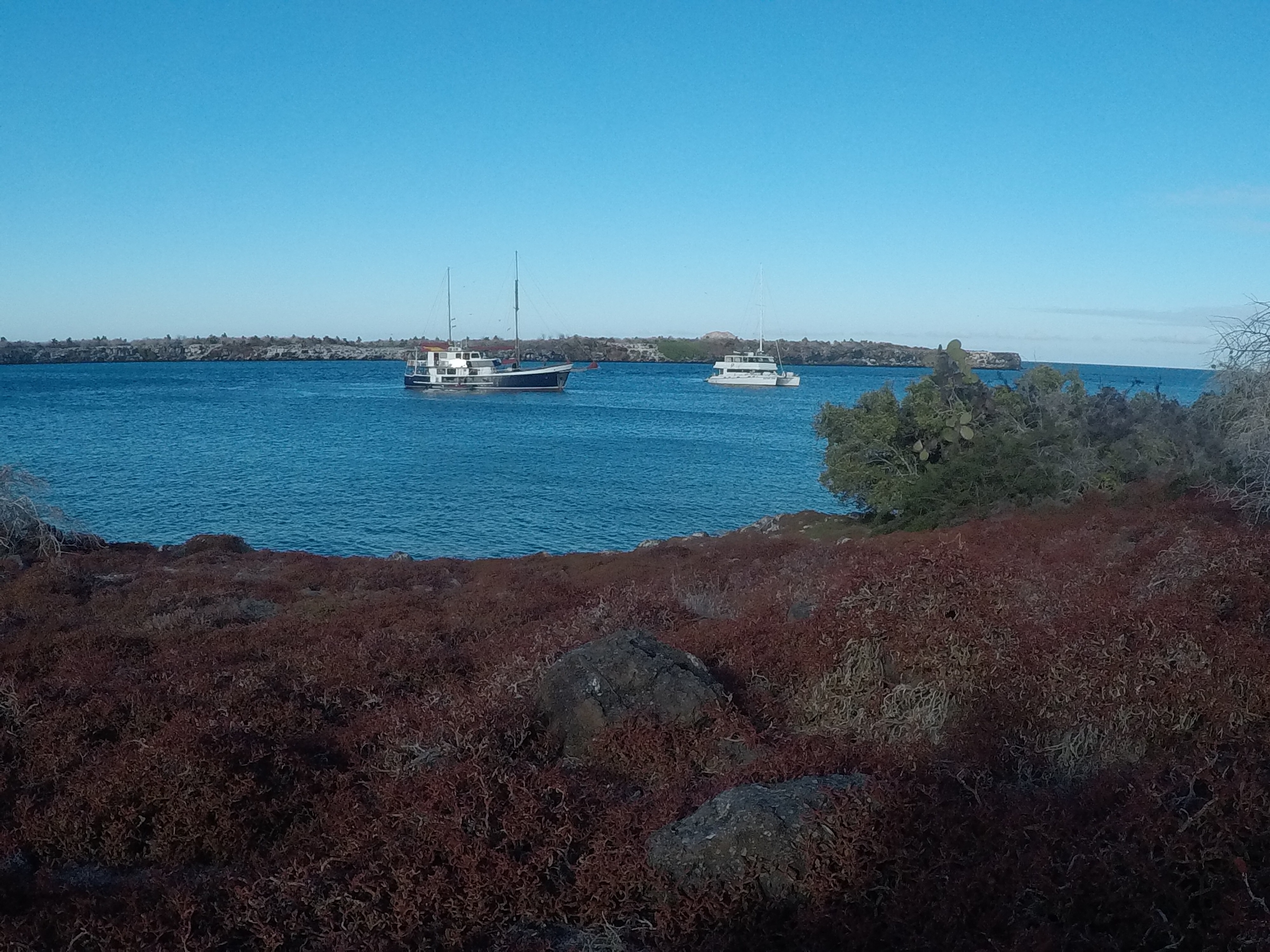


 I could happily spend the next two days just enjoying the views and the beach but there were roads to be run and gorgeous places to visit. Among many things to do, I chose two things: a run from volcano Sierra Negra and a visit to the Los Túneles.


 My final trip was to the mysterious Isla Florena which has housed some of the first inhabitants of the Galapagous Islands, it has a mysterious history as well because of the disappearance two of the early residents. (see this interesting article that my friend Isabelle shared with me recently: http://www.telegraph.co.uk/travel/destinations/south-america/ecuador/galapagos-islands/articles/the-secret-history-of-galapagos/ )






 There were some issues with the marked course and some of us went off-course at the beginning of the race. This meant that later on, not only we had to make up for the gap but most of us ended up doing at least couple of mile more than 26.2 miles. Ignoring this, the tourists and the heavy traffic, it has been an epic race. The heat and the late night timing wasn’t great but every time my body gave any fatigue signal, I was humbled by the sight of a WMC participant and reminded myself that they were doing this run on top of 131 miles that they have already done.




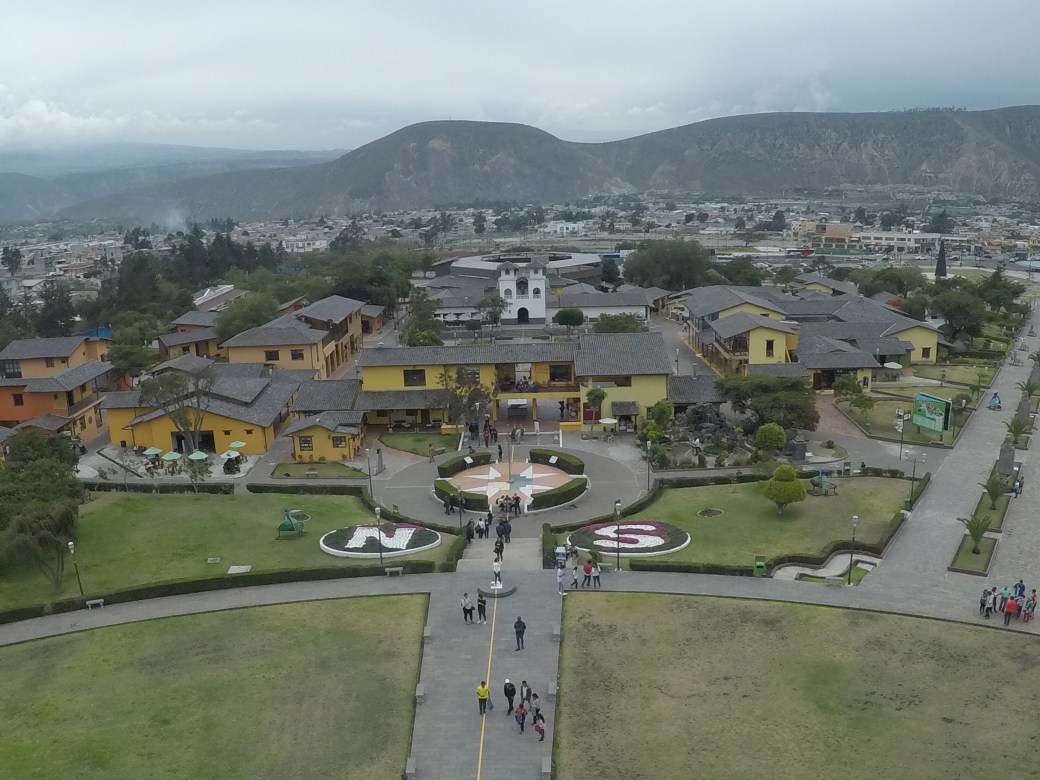

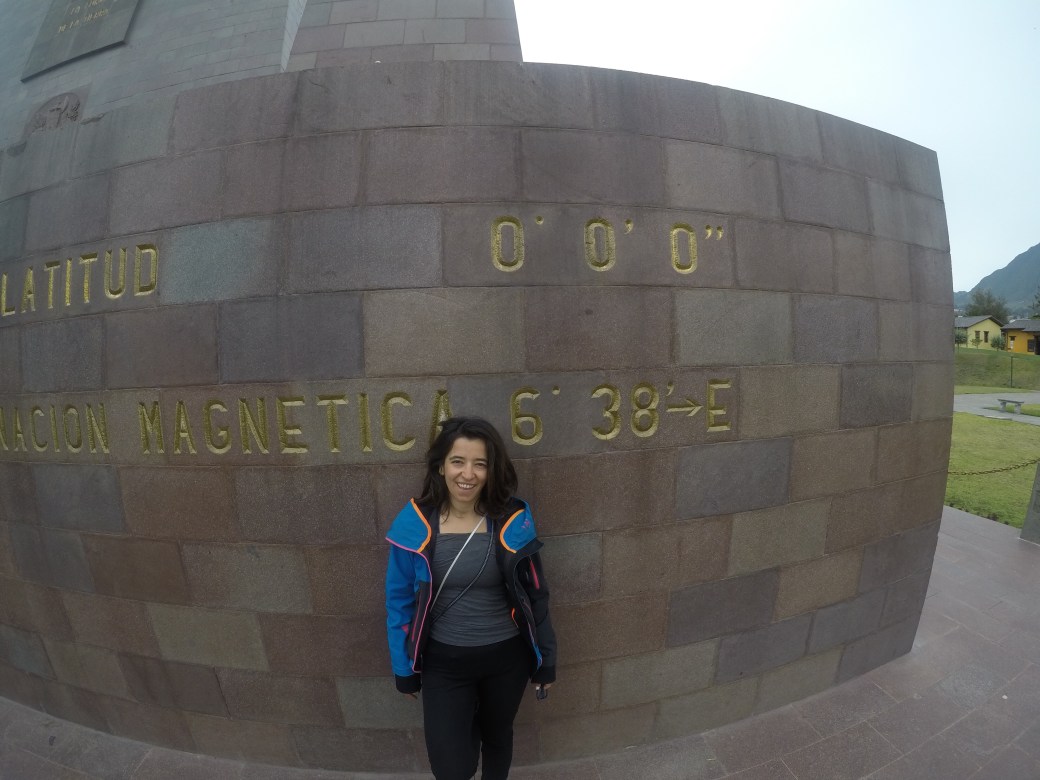
 Every official in the area is almost trained not to direct you to the exact location, which is a much smaller museum. In any case, it’s a fantastic memorial with lots of entertaining high school science experiments and amazing exhibition on the local cultures that lived in the area.


 The owner was insistent but the food looked decent so, we didn’t resist. I had delicious grilled fish and coca-cola. The other guests (a large ecuadorian/colombian family) were great lunch companions.













 Busy Feet